Gutter Overflow During Spring Storms: 6 Causes (and the Fast Fixes)
Published
By Wes Webb, Owner of True North Roofing
Spring in Western North Carolina brings beautiful blooming trees, but it also brings torrential mountain downpours. When your gutters overflow during a heavy rainstorm, it is much more than just a landscaping nuisance. That cascading water is actively eroding your foundation, flooding your basement, and rotting the wood around your roofline.
Your gutters are designed to be a highly efficient water management system. When they fail, water wicks backward behind your fascia board and pushes up under your lower shingles, often leading to a costly roof leak repair. If you have water pouring over the edges of your gutters this spring, it is likely due to one of these six common causes.
1. Clogs from Leaves and Pine Needles
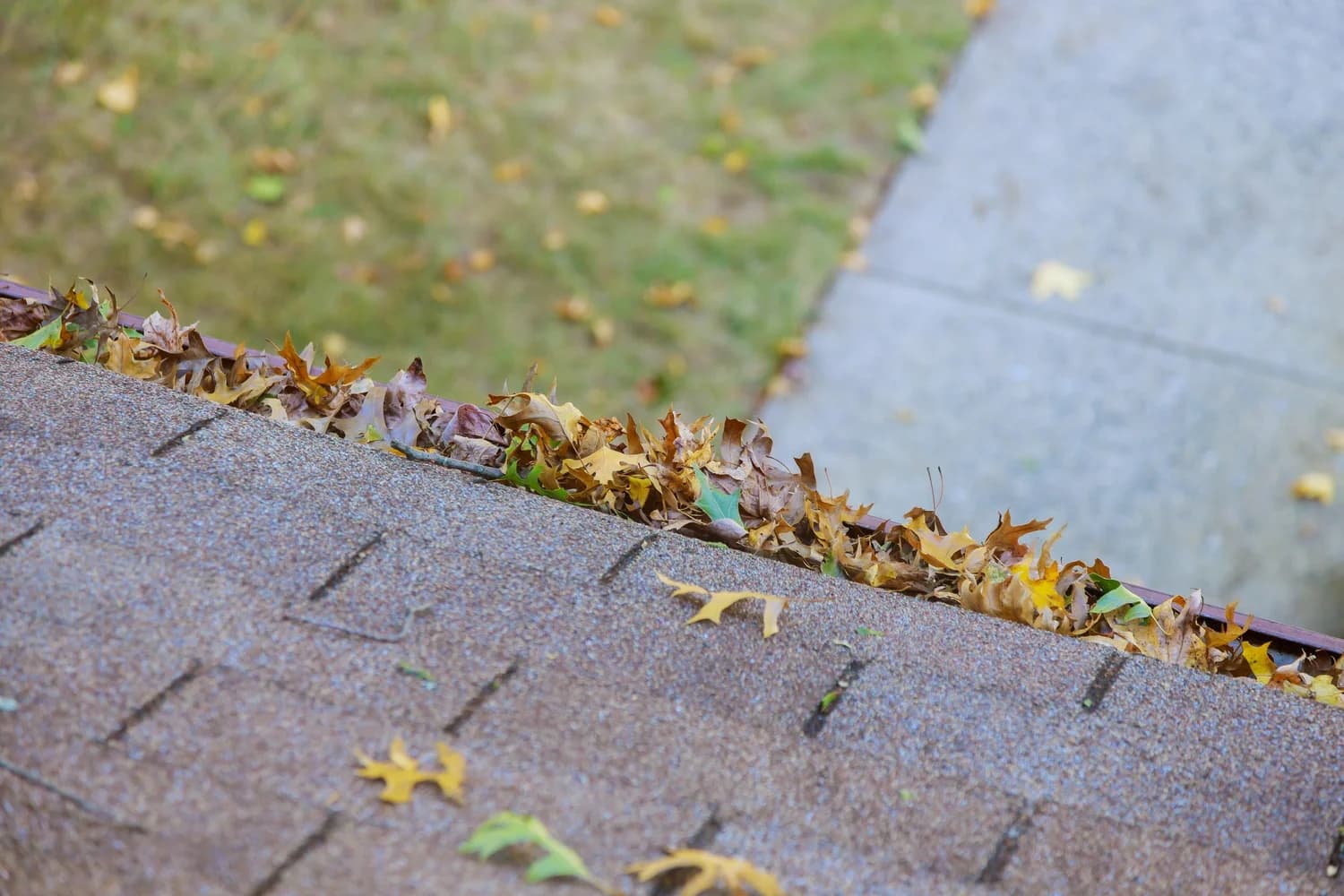
This is the most frequent offender in tree heavy areas like Asheville and Brevard. Over the fall and winter, leaves, twigs, and pine needles accumulate in the gutter trough. When the heavy spring rains arrive, this debris acts like a beaver dam, completely blocking the flow of water to the downspout.
The Fast Fix: A thorough cleaning will solve the immediate issue. However, the permanent fix is installing a premium micro-mesh gutter guard system to keep organic debris out while letting high volumes of water flow freely.
2. Undersized Gutter Troughs
Many older homes were built with standard 5-inch gutters. While these might work in drier climates, they simply do not hold enough volume to handle sudden, intense mountain storms. The water fills the small trough faster than it can drain. This is especially true if you have upgraded to a metal roofing system, as metal sheds rainwater much faster than asphalt, easily overwhelming a small gutter.
The Fast Fix: Upgrading to a seamless 6-inch aluminum gutter system. The larger trough holds significantly more water, ensuring it safely reaches the downspouts even during a torrential downpour.
3. Improper Pitch and Sagging
Gutters might look completely flat from the driveway, but they are actually installed with a slight downward slope directed toward the downspouts. Over time, the weight of winter ice or heavy debris can pull the mounting hangers loose, causing the gutter to sag in the middle. When this happens, water pools in the sagging section and eventually spills over the front edge.
The Fast Fix: A professional contractor can assess the system, replace the bent or failing hangers, and correctly re-pitch the gutter line so gravity can do its job.
4. Not Enough Downspouts
You could have completely clean, perfectly pitched 6-inch gutters, but if you only have one downspout for an 80-foot stretch of roof, the system will fail. The water simply bottlenecks at the single exit point and quickly overflows the trough. This is also a major issue for large commercial roofing properties where long runs of flat roof drainage get bottlenecked at a single scupper.
The Fast Fix: Adding extra downspouts to long stretches of gutter. A good rule of thumb is one downspout for every 30 to 40 feet of continuous gutter.
5. High-Velocity Roof Valleys
A roof valley is the "V" shaped area where two sloping roof lines meet. During a heavy storm, these valleys act like a firehose, funneling massive amounts of water into one highly concentrated area of the gutter. The water hits the gutter with so much velocity that it simply shoots right over the top edge like a ramp.
The Fast Fix: Installing an aluminum splash guard (also known as a valley shield) on the top edge of the gutter right where the valley meets the roofline. This simple piece of metal catches the rushing water and drops it safely into the trough.
6. Blocked Underground Drainage
Sometimes the problem is not on the roof at all. If the water makes it down the spout but then backs up and overflows at the top, your underground drainage pipe is blocked. The black corrugated pipes buried in your yard can easily become crushed by tree roots or clogged with underground mud and debris.
The Fast Fix: Disconnect the downspout from the underground pipe and attach a temporary surface extension to route the water away from your foundation. You will then need to have a landscaping or drainage company snake or replace the buried line.
Protecting Your Home This Spring
At True North Roofing, we look at the entire exterior envelope of your home. We know that a great roof needs a high performance gutter system to function correctly. We can evaluate your current drainage setup, clear out the problem areas, and install the seamless systems and guards required to handle unpredictable mountain weather.
Because these exterior upgrades are a critical investment in your home's structural health, we offer flexible financing options to make sure you can secure the right protection today with affordable monthly payments.
Ready to stop the overflow and protect your foundation? Reach out to schedule your inspection today and let our local team get your gutters flowing properly.
Serving Our Local Communities:
Asheville & Buncombe County
Hendersonville & Henderson County
Waynesville & Haywood County
Brevard & Transylvania County
Sylva & Jackson County