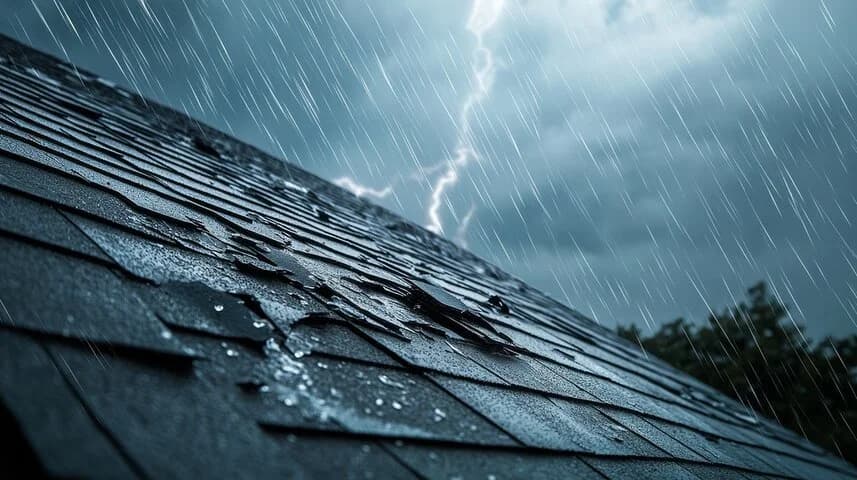
Understanding Insurance Claims for Roof Repairs in North Carolina
Published · Updated
By Wes Webb, Owner of True North Roofing

Storm damage is stressful enough. The insurance process should not add confusion on top of it. If you are dealing with hail, high winds, or heavy rain in Western North Carolina, this guide will walk you through how a roof insurance claim in NC typically works, what insurers look for, what to document, and how to avoid the common mistakes that slow things down.
This is written for homeowners in Asheville, Hendersonville, Weaverville, Black Mountain, Arden, Fletcher, Candler, Waynesville, Canton, Swannanoa, Fairview, Leicester, and Mills River.
If you want the fastest path to clarity, start here: Free Roof Inspection.
1) First things first: is your roof damage likely claim-worthy?
Most homeowners policies are designed to cover sudden, accidental damage, not long-term wear.
Often covered (depending on your policy):
Hail impact that damages shingles, soft metals (vents, flashing, gutters), or creates functional damage
Wind that creases shingles, lifts edges, blows off ridge caps, or tears flashing
Tree limb impact that punctures the roof or breaks components
Often not covered:
Normal aging, granule loss from time, brittle shingles near end-of-life
Maintenance issues (chronic leaks from old flashing, clogged gutters, poor ventilation)
Damage that happened gradually
A professional inspection helps separate true storm damage from wear so you are not guessing. Book one here: Roof Inspections – Asheville.
2) What to do before you call your insurance company
This is the part that speeds everything up later.
A. Mitigate further damage
North Carolina guidance emphasizes making reasonable emergency repairs to prevent additional damage and keeping documentation of what you did. Save receipts and take before/after photos. NC DOI
Practical examples:
Place buckets under active drips
Move valuables away from leaks
Cover broken openings if needed (professionally tarp if the roof is compromised)
If you need immediate help, start here: Roof Repair – Asheville.
B. Document the storm damage (simple but thorough)
Take:
Wide shots of each roof slope from the ground
Close-ups of missing shingles, lifted edges, dents, punctures, displaced granules
Photos of soft metals (ridge cap, vents, flashing, gutters) that show hail impact
Interior photos (ceiling stains, attic moisture, wet insulation)
We provide a photo-documented packet during your Free Roof Inspection so you have everything organized.
3) Understanding your policy basics (without the jargon)
Most roof insurance claim NC outcomes come down to a few core policy items:
Deductible
Your deductible is what you pay out of pocket before insurance pays the rest. Many NC policies also have special wind/hail deductibles (percentage-based). Check your declarations page.
Actual Cash Value vs Replacement Cost Value
ACV (Actual Cash Value): pays depreciated value (older roof = less payout)
RCV (Replacement Cost Value): pays the replacement cost, often with depreciation released after work is completed
Exclusions and endorsements
Some policies have “cosmetic damage” exclusions, special roof surface schedules, or limitations for older roofs. This is why the inspection report and the adjuster conversation matter.
4) Do they have to replace your whole roof in North Carolina?
This is where many homeowners get surprised.
The North Carolina Department of Insurance notes that a homeowners policy generally covers direct physical damage and that insurers typically only have to replace the damaged area, even if shingles do not match. NC DOI
What that means for you:
If only one slope is damaged, the claim may be scoped to that slope
If matching materials are discontinued, the insurer may still approve only the damaged section, depending on policy language
This is also where a detailed inspection matters. If damage is widespread across multiple slopes, the scope may change. Start with documentation: Roof Inspections – Asheville.
5) The “roof claim timeline” in NC: what usually happens
Every carrier is different, but the flow is usually:
Storm happens
You document and mitigate (photos, receipts, temporary protection) NC DOI
Inspection report (roofing contractor documents damage and provides an estimate)
You file the claim (or you file first and schedule a contractor to meet the adjuster)
Adjuster visit (carrier inspects and writes an estimate)
Scope/price review (differences get reconciled)
Approval and payment (often partial payment first, then depreciation later for RCV)
6) What if your claim is underpaid or you disagree on the estimate?
You have options, and you do not have to panic.
Appraisal
North Carolina’s Department of Insurance notes that many policies include an appraisal provision to help resolve disputes about the value of the loss (you and the insurer each select an appraiser, and an umpire may be involved if they cannot agree). NC DOI
Disaster mediation
North Carolina also has a disaster-related mediation framework for certain residential property claims arising out of disasters. North Carolina General Assembly+1
Important: appraisal and mediation are process tools. They do not automatically mean litigation. (Always consult your policy and, if needed, a qualified professional for guidance.)
7) Common roof claim mistakes that cost homeowners time and money
Mistake 1: Waiting too long to document
Damage can look worse or different after multiple weather events. Get photos and an inspection right away.
Mistake 2: Doing major repairs before the adjuster sees it
Emergency mitigation is good. Full repairs before documentation can complicate scope. NC guidance emphasizes making emergency repairs and documenting them, not rushing into extensive work before inspection. NC DOI
Mistake 3: Only focusing on shingles
Hail and wind often show up first on:
Ridge cap
Pipe boots
Vent caps
Flashing edges
Gutters and downspouts
That is why we also evaluate related systems like Seamless Gutters and skylight curbs (Skylight Replacement) when needed.
Mistake 4: Trusting “storm chasers”
The NC Attorney General’s consumer guidance warns about “drive-by roofers” and the risks of poor workmanship and difficulty locating them later. NCDOJ
8) Repair vs replacement after a storm (how insurers think about it)
Insurers typically scope based on:
Extent of damage (one area vs multiple slopes)
Functional damage (wind creases, lifted seals, punctures, compromised underlayment)
Repairability (availability of matching products, safe repair details)
Age and condition (policy-specific)
We help you evaluate both paths clearly:
If replacement is the best long-term move, you can also compare materials:
9) A simple roof insurance claim checklist (NC)
Use this after hail or wind:
Take exterior photos of every slope (wide + close-up)
Take photos of gutters, vents, flashing dents
Check attic for wet decking or insulation
Make emergency mitigation and save receipts NC DOI
Schedule a documented roof inspection
File the claim (if damage is legitimate and worth the deductible)
Meet the adjuster with your documentation
Review scope carefully for critical line items (valleys, flashing, ventilation, drip edge, underlayment)
Keep all emails, notes, and estimate versions in one folder
10) Why “local” matters for roof insurance claims in Western NC
Roofs in the mountains are different:
Steeper pitches
More cut-up designs (dormers, valleys, chimneys)
Wind exposure in ridgelines
Heavy rain that tests every flashing detail
A local contractor understands what fails most often here and how to document it properly for a fair scope.
We serve: Asheville, Hendersonville, Weaverville, Black Mountain, Arden, Fletcher, Candler, Waynesville, Canton, Swannanoa, Fairview, Leicester, Mills River and more.
Local pages:
Asheville Roofing
Hendersonville Roofing
Weaverville Roofing
Black Mountain Roofing
Arden Roofing
Fletcher Roofing
Candler Roofing
Waynesville Roofing
Canton Roofing
Swannanoa Roofing
Fairview Roofing
Leicester Roofing
Mills River Roofing
11) What the adjuster looks for on the roof and in the attic
Contrary to popular belief, a thorough adjuster doesn't start on the ladder. They start in the attic.
The Attic Inspection: Searching for the "Fingerprints" of a Leak
The attic is the only place where an adjuster can see the "underside" of your roof’s performance. They aren't just looking for water; they are looking for the story of how that water got there.
Saturated Decking and "Rust Rings"
Adjusters look at the plywood or OSB (decking) for dark staining. Specifically, they look for "rust rings" around nails. If a nail is rusted, it means water has been traveling down the shank for a significant amount of time. If the rust is fresh, it supports a recent storm claim. If the wood is black and crumbling, they may classify it as "long-term seepage," which is often excluded from coverage.
Matted or Discolored Insulation
Wet insulation loses its R-value and "clumps" together. An adjuster will move insulation aside to see if the vapor barrier or the drywall underneath is stained. They use this to trace a leak back to a specific penetration, such as a chimney or a cracked pipe boot.
Daylight and "Stars"
In a dark attic, an adjuster will look for pinpricks of light. While some light is normal near ridge vents, daylight in the middle of a roof slope indicates a "nail pop" or a puncture from wind-driven debris or hail.
The Roof Surface: Wind vs. Hail vs. Wear
Once on the roof, the adjuster is looking for "functional damage." In 2026, many NC policies have moved away from covering "cosmetic damage" (scratches that don't cause leaks).
The "Test Square" for Hail
An adjuster will typically mark off a 10x10 foot "test square" on each slope of your roof (North, South, East, West). They are looking for a specific number of hail hits within that square to justify a full replacement. They look for circular "bruises" where granules are missing and the mat is soft.
The "Lift Test" for Wind Damage
Wind damage isn't just missing shingles. Adjusters look for "creased" shingles. This happens when the wind lifts a shingle, breaks the sealant strip, and folds it back. Even if the shingle lays back down, the "crease" line is a structural failure. They also check for "chatter marks"—fine lines where the shingle has been vibrating against the one below it.
Collateral Damage (The Proof)
Adjusters look at the "soft metals" first. If your gutters, box vents, and furnace caps are dented, it proves that the hail was large enough and fast enough to damage the shingles. If the metal is clean but the shingles are "damaged," they may suspect the damage is actually just old age or manufacturing blisters.
Maintenance Exclusions: Why Claims Get Denied
This is the "gloves off" part of the process. If an adjuster finds evidence of neglect, they can deny the claim even if there was a storm.
Gutter Overflows: If your gutters are clogged, water can wick backward into the fascia. Adjusters often attribute "perimeter rot" to poor maintenance rather than storm damage.
Existing Repairs: If they see "unprofessional" patches or mismatched shingles from a previous leak that was never officially fixed, they may argue that the current leak is a continuation of an old problem.
Granule Loss from Age: Every roof loses granules over time. Adjusters are trained to distinguish between "hail impact" (circular, sharp edges) and "mechanical wear" (random, vertical patterns caused by shingles rubbing together).
No roofer can legally waive your deductible
A quick reminder: In North Carolina, it is illegal for any roofing contractor to offer to "waive" or "pay" your insurance deductible. This is considered insurance fraud under NC law.
A reputable contractor will help you navigate the claim and offer financing options to cover your out-of-pocket costs, but they will never ask you to sign a contract that includes "deductible assistance."
Serving Our Local Communities:
schedule your detailed roof inspection
Final note (important)
This article is educational, not legal advice. Your specific coverage depends on your policy language and the facts of your loss. When in doubt, read your declarations page and policy, and speak with your agent or carrier.
Next step: get clarity fast
If you suspect storm damage and want a straight answer, book a Free Roof Inspection or call (828) 507-0778. We will document what we find, explain your options in plain language, and give you a clean repair vs replacement plan.