How to Spot Hail Damage on Shingles (And When It’s Worth a Claim)
Published
By Wes Webb, Owner of True North Roofing
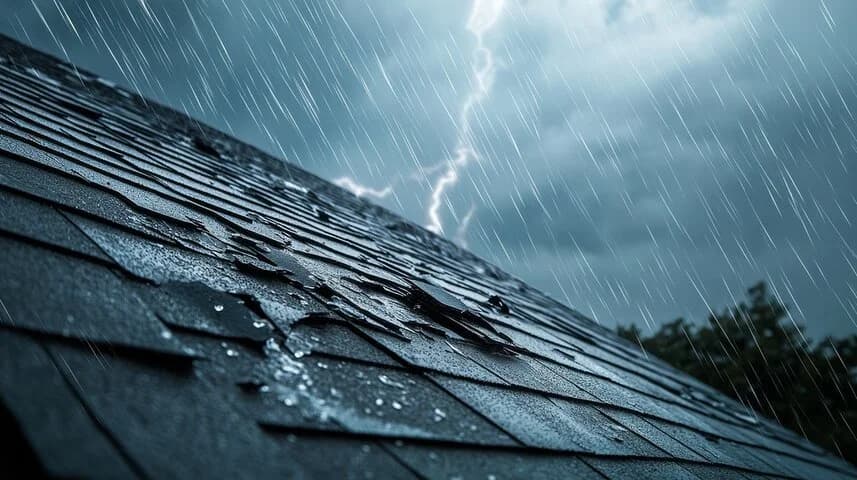
Hail storms in Western North Carolina are unpredictable and destructive. While a major storm can leave obvious dents in your car, the damage it does to your roof is often subtle, hidden, and far more expensive in the long run.
In cities like Asheville and Hendersonville, we see hail events that vary from pea-sized to golf-ball-sized. Many homeowners assume that if they don't see missing shingles, their roof is fine. Unfortunately, hail damage is a "silent killer" of asphalt shingles that can take 2 to 3 years to manifest as an actual leak.
Here is how to identify real hail damage and how to determine if the damage justifies the risk of filing an insurance claim.
What Does Hail Damage Actually Look Like?
Hail does not usually "break" a shingle immediately. Instead, it causes what we call "bruising." Imagine hitting a piece of fruit with a hammer. The skin might stay intact, but the structure underneath is destroyed.
The "Bruise" or Circular Indentation
When a hailstone hits an asphalt shingle, it compresses the fiberglass mat. This creates a dark, circular spot where the granules have been knocked away. If you touch these spots, they will feel soft or "spongy" compared to the rest of the shingle.
Granule Loss and Exposure
Granules are the "sunscreen" for your roof. They protect the asphalt from UV rays. Hail knocks these granules loose, often sending them down your gutters in piles. Once the granules are gone, the sun will bake the exposed asphalt, causing it to crack and leak within a few seasons.
Cracking in the Mat
Large hailstones or high-velocity wind-driven hail can actually crack the fiberglass mat of the shingle. These cracks may look like a random starburst pattern. Once the mat is cracked, the shingle has lost its structural integrity.
Deciding if a Claim is "Worth It"
Filing an insurance claim is a significant decision. In North Carolina, you should evaluate three factors before you call your adjuster.
The Deductible vs. The Damage
If your roof is small and only has minor damage, the cost of the repair might be close to your deductible. For example, if your deductible is $2,000 and the repair is $2,500, it may be wiser to pay out of pocket to avoid a claim on your record. However, if the entire roof needs replacement (a $15,000+ project), the claim is clearly the right move.
The Age of Your Roof
If your roof is 20 years old and nearing the end of its life, an insurance claim for hail damage is a major win. It allows you to get a modern, high-performance system for the cost of your deductible. If your roof is brand new, you still want to fix the damage, but you have less "equity" to gain from the replacement.
The "No Waiver" Law
It is important to remember that in North Carolina, it is illegal for a roofing contractor to "waive" or "pay" your insurance deductible. If a roofer offers to do this, they are asking you to participate in insurance fraud. At True North Roofing, we maintain total transparency and can offer financing options to help cover your deductible cost.
Signs of Hail Damage from the Ground
You don't always have to climb a ladder to see if you have a problem. Look for these "collateral" signs around your property:
Dented Gutters or Downspouts: Metal is more "honest" than shingles. If your gutters have small, round dents, your roof took the same hits.
Damaged Window Screens: Look for small tears or dents in your window screens.
Chipped Siding or Paint: High-velocity hail will often chip the paint off of wooden fascia or dent vinyl siding.
Destroyed Mailboxes or Deck Furniture: If your plastic mailbox or wooden deck looks like it was hit with a shotgun, your roof is likely compromised.
Why You Need a Detailed Roof Inspection First
Insurance adjusters are trained to find reasons to deny claims. They often attribute hail damage to "blistering" or "normal wear and tear."
Before you file a claim, you need a Detailed Roof Inspection from a contractor who understands the difference. We provide a full digital report with high-resolution photos of every bruised shingle and damaged component. This documentation gives you the leverage you need to ensure your insurance company treats you fairly.
Serving Our Mountain Communities: