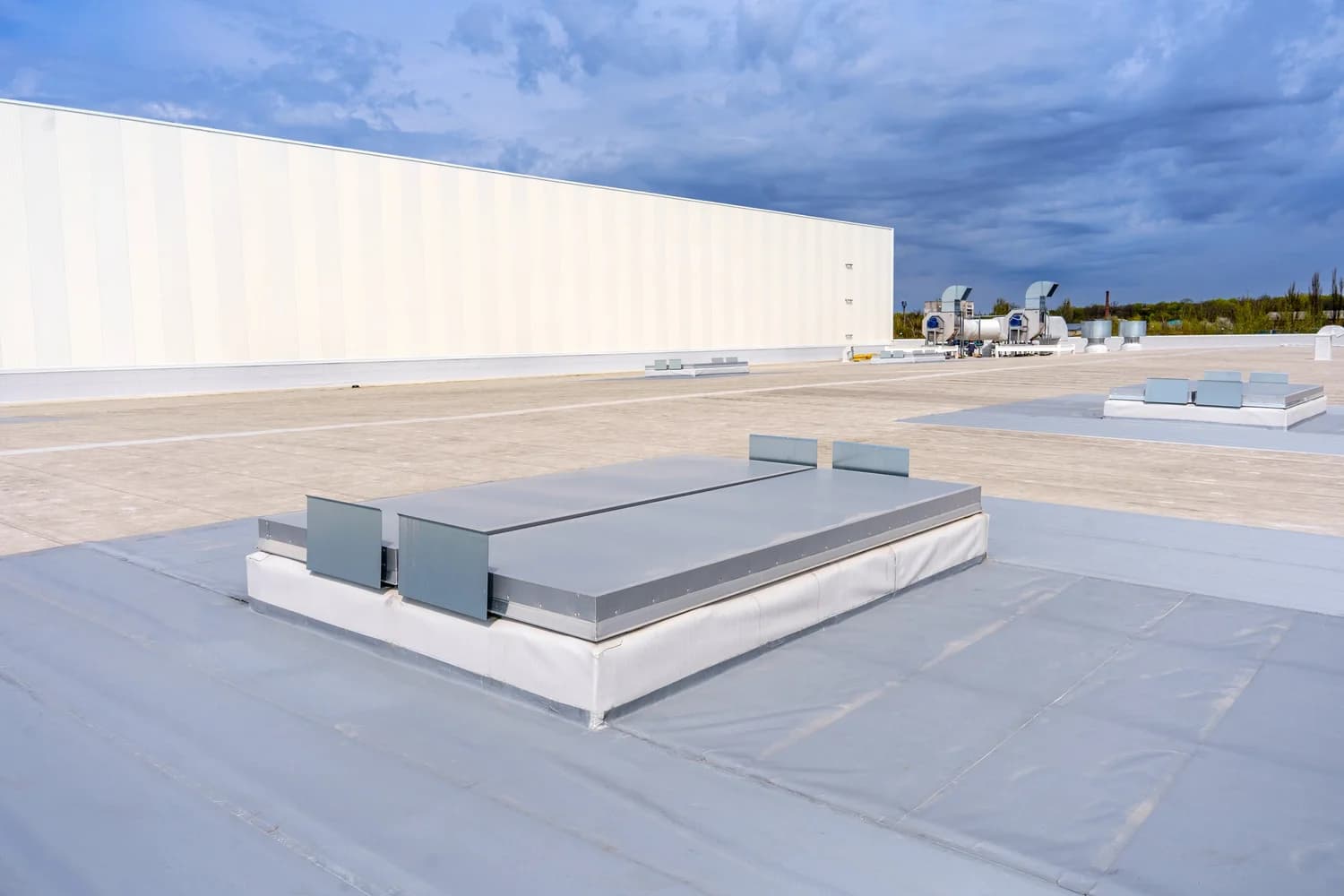
Commercial Roof Replacement: Tear-Off vs. Recover (Pros, Cons, Code)
Published
By Wes Webb, Owner of True North Roofing
When a commercial building in Western North Carolina begins to show its age and persistent leaks start threatening your inventory, business owners are faced with a major capital expenditure. Replacing a flat roof is a complex process, but it usually boils down to one critical decision: do you perform a complete tear-off, or do you install a roof recover system?
Making the wrong choice can lead to building code violations, structural damage, or wasted funds. To protect your commercial property and your bottom line, here is a detailed breakdown of the pros, cons, and legal requirements of both commercial roof replacement methods.
1. The Full Roof Tear-Off
A full tear-off is exactly what it sounds like. The roofing crew completely removes the existing membrane, the underlying insulation, and the flashings down to the bare structural decking (usually corrugated steel, wood, or concrete).
The Pros:
Total Transparency: This is the only way to expose the building's structural deck. It allows the roofing contractor to identify and repair hidden rust, rot, or structural failures that have developed over the decades.
Maximum Lifespan: Because you are starting from a completely clean slate with brand-new, dry insulation, a full tear-off guarantees the maximum lifespan and the strongest possible manufacturer warranties for your new commercial roofing system.
The Cons:
Higher Cost and Disruption: Tearing off an entire roof requires significantly more labor and generates massive amounts of landfill waste. It is a louder, longer, and more expensive process that can temporarily disrupt the daily operations of your business.
2. The Roof Recover (Retrofit) System
A roof recover (or overlay) involves leaving the existing roof exactly where it is and installing a new roofing system directly on top of it. This usually involves laying down a recovery board or new insulation, followed by a new layer of TPO or EPDM membrane.
The Pros:
Cost-Effective and Fast: Because there is no demolition and reduced disposal fees, a recover system is significantly cheaper and much faster to install.
Minimal Disruption: Your business can usually operate completely uninterrupted while the new membrane is installed overhead.
Added Insulation: Adding a new layer of insulation over the old roof increases your building's R-value, which can drastically lower commercial heating and cooling costs.
The Cons:
Added Weight: Commercial structures are engineered to hold a specific amount of weight. Adding a second roof layer adds significant dead load to the building, which can be dangerous if the structure is already stressed.
Masking Hidden Issues: If the existing roof deck is compromised, a recover simply hides the problem. If water gets trapped between the old roof and the new one, it will accelerate rot and cause premature failure.
3. The Building Code Dictates the Decision
Often, the choice between a tear-off and a recover is not up to you—it is dictated by the International Building Code (IBC) and local North Carolina ordinances.
The building code strictly prohibits installing a new roof over two existing layers of roofing. If your commercial building already has two layers of roofing material on it, a complete tear-off is legally required. No reputable contractor will break this code, as it compromises the structural integrity of the building and instantly voids your insurance coverage.
4. The Importance of Core Testing
Before a recover can even be considered, a true professional must perform a core test or an infrared moisture scan.
When a flat roof fails and requires a roof leak repair, water often saturates the insulation boards beneath the membrane. If you install a recover system over wet insulation, that moisture is permanently trapped. It will boil during the summer heat, causing the new membrane to blister, separate, and ultimately fail. Any wet areas discovered during testing must be completely cut out and replaced before a recover can be approved.
5. Sloped Commercial Structures
While tear-offs and recovers dominate flat systems, many mountain businesses operate out of sloped structures. If your commercial property features steep-sloped architecture, upgrading from aging shingles directly to a standing seam metal roofing system provides a lifetime, maintenance-free solution that completely transforms the professional appearance of your facility.
Financing Your Commercial Roof Upgrades
A reliable commercial roof is essential to keeping your doors open and your inventory safe. At True North Roofing, we specialize in evaluating flat and low-slope commercial structures to determine the safest, most cost-effective path forward for your business.
To help manage your capital expenses, we offer highly flexible financing options. You can secure a premium commercial roofing system today while keeping your cash flow stable with predictable monthly payments.
Do not let a failing flat roof disrupt your business operations. Reach out to schedule your commercial inspection today and let our local experts protect your facility.